

Ever since queen of anti aging treatments Kim kardashian announced she was getting salmon sperm injected into her face, the beauty industry has been moving at the speed of light to get products with PDRN (the shortened version of the medical name) onto the shelf. And everyone from skincare influencers to skincare nubies have been loving them. But are these products actually doing anything worth talking about?
So PDRN, what is it?
PDRN stands for polydeoxyribonucleotide, which is so much to say you can see why it got shortened. It’s made up of DNA, specifically it is purified fragments of DNA taken from salmon. The sperm is taken from the salmon during commercial food processing and goes through an extensive process to turn it into a clean, pharmaceutical-grade active ingredient. In fact it goes through such a process that Dr Ifeoma Ejikeme, Medical Director at Adonia Medical Clinic, points out that the processing is so refined that what ends up in the bottle is <cite index=”23-1″>”a purified, biocompatible product”</cite> rather than the thing itself.
What does PDRN do?
PDRN nudges skin cells towards repair, calms inflammation and improves elasticity. Dr Mona Gohara, a board-certified dermatologist at Dermatology Physicians of Connecticut, puts it better than any brand ever has: <cite index=”30-1″>”It’s almost like giving your skin blueprints to rebuild itself.”</cite> And if that wasn’t enough for you then just know that Korean dermatologists have been using it since the early 2000s, and we all know how good Korean doctors are.
What about PDRN in skincare?
Here’s where we go slightly off-script from the rest of the internet. Almost all the good clinical evidence for PDRN comes from injectables. PDRN is a big molecule and intact skin is very good at its job, which is keeping big molecules out. So a serum sitting on the surface has a delivery problem that no amount of marketing can solve. Formulation matters enormously, encapsulation also matters and if you’re buying a topical PDRN expecting injectable results, you’re essentially buying a moisturiser with an interesting ad.
The difference between PDRN and PN
Whilst PDRN and PN both come from the same salmon DNA, the difference is chain length. PN is the long-chain version, PDRN is the shorter fragments, which sounds confusing but it’s really not.
PDRN’s short chains work through adenosine receptor activation, which is a repair-and-calm mechanism. It’s good at soothing angry skin, things like post-procedure recovery or pigmentation. PN’s long chains behave more like a gel that provides long term collagen growth. They are slower to break down and are structural, which is where the firmness and skin thickness results come from, they rebuild rather than repair. The chain length that makes PN good at structural work is what stops it going through intact skin as a serum.
So if what you want is thicker, firmer skin, then a PDRN serum won’t give you it and you can’t put PN in a bottle and expect it to be able to do anything.
So PDRN in a serum..
As always, we don’t want you to be disappointed so here’s two things we would look out for.
Firstly, PDRN is rarely called PDRN on the ingredient list so instead look for Sodium DNA, Hydrolysed DNA or Polynucleotides. If the only fishy-sounding ingredient is salmon roe extract or the product says Rose PDRN or Green Tea PDRN, then you are looking at a plant-derived stand-in and not the desired molecule at all.
Secondly, ingredients are listed in descending order. If Sodium DNA is sitting near the bottom, past the preservatives, there’s a smidge of it in the bottle and honestly a waste of time.
PDRN serums we would buy
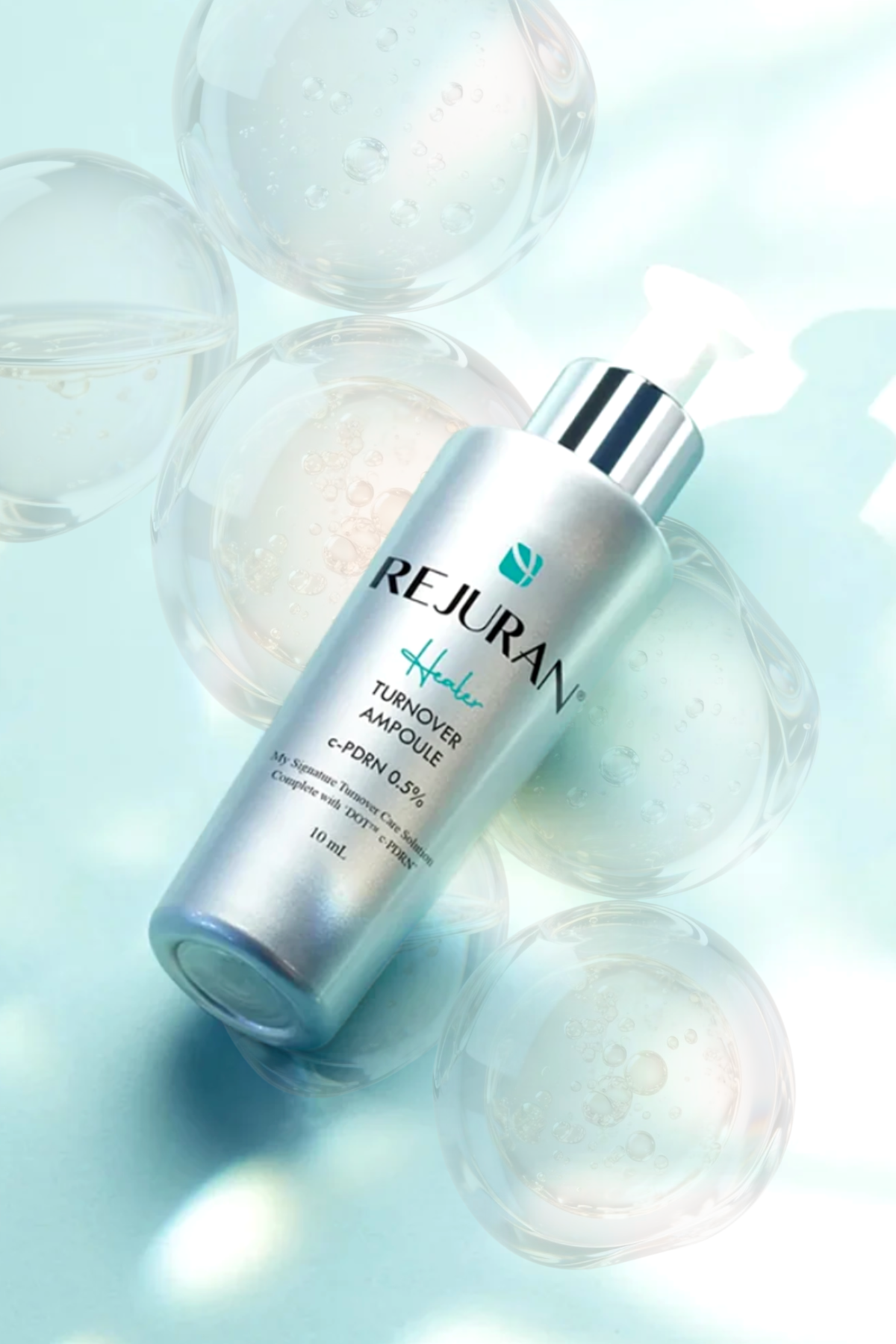
Rejuran Turnover Ampoule This is a good one, it contains 0.5% c-PDRN, the same concentration across their whole ampoule range, alongside niacinamide, arbutin, bisabolol and hyaluronic acid. Rejuran also produces the original clinical injectable (they know their shiz) and they’ve reduced the molecular weight to give it a fighting chance of getting anywhere. It’s best used after a laser or a peel when your skin is in repair mode, which is when PDRN has the most benefit.
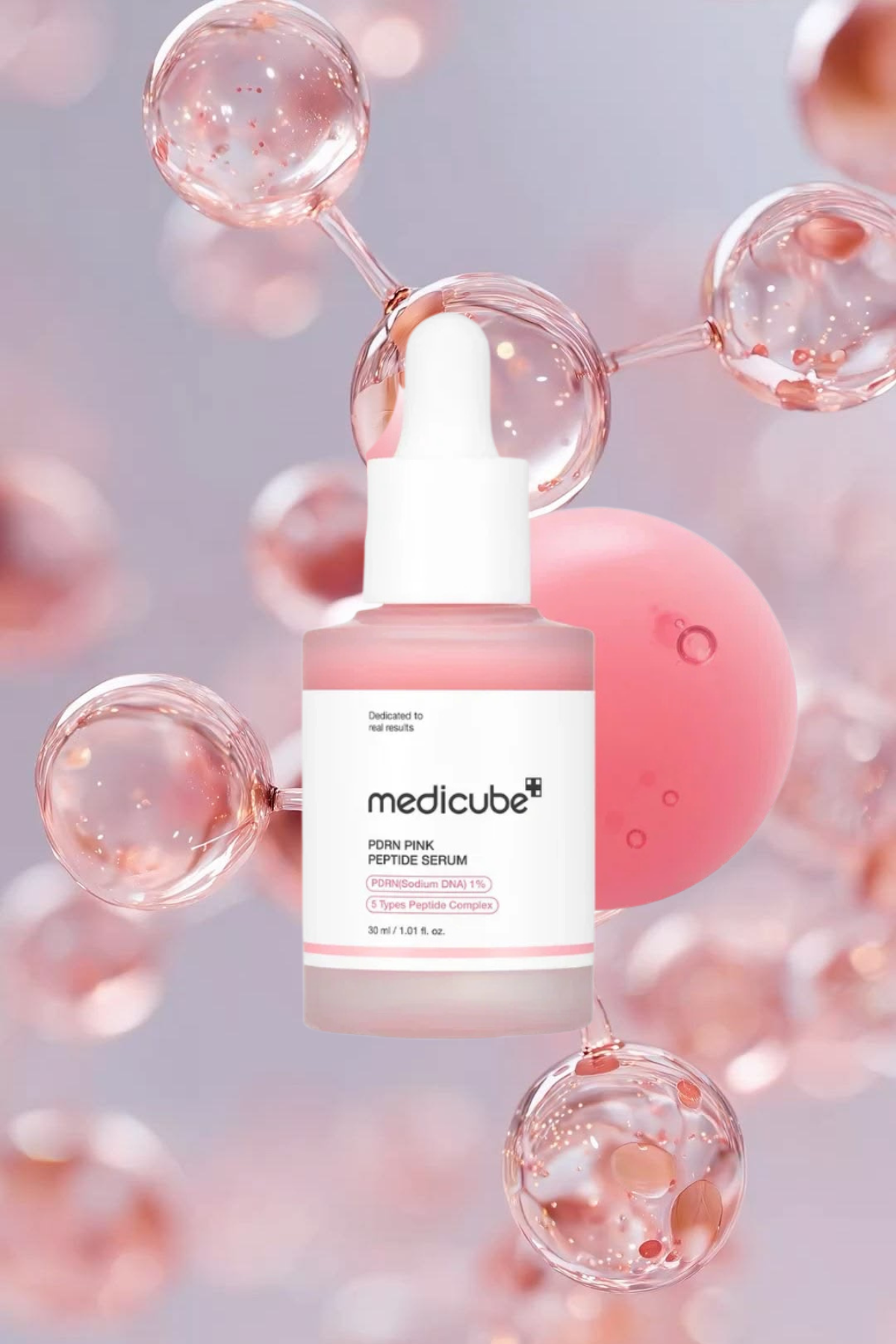
Medicube PDRN Pink Peptide Serum The highest concentration in a serum that we found sitting at 10,000ppm, which is 1% and Sodium DNA sits mid-list rather than hiding at the end, so the label and the ingredient order agree with each other. The caveat is that the peptide complex is doing a lot of the hard work. Copper tripeptide-1, acetyl hexapeptide-8 and the Matrixyl components. So take the PDRN out and you’d still have a good serum. It also contains fragrance, which in a product sold on barrier repair is a decision we’d like explained.
And the ones we wouldn’t
VT PDRN Essence 100. Sodium DNA is the last ingredient on the list. Everything else in the bottle, even the preservatives, is present in greater quantity.
Anua PDRN Hyaluronic Capsule 100 Serum. Full marks for transparency, they publish the number. It’s 100ppm, that’s 0.01%, or a hundredth of the Medicube. It’s a lovely hyaluronic acid serum with 11 forms of HA and it will hydrate your skin beautifully. Just don’t buy it for the PDRN.
Innisfree Retinol Green Tea PDRN Serum. There is no PDRN in this. Green Tea PDRN is Innisfree’s trademarked name for a lactobacillus ferment from Jeju green tea, and their own description says it’s a vegan alternative <cite index=”52-1″>”inspired by the viral K-Beauty PDRN treatment”.</cite> Inspired by is doing heroic work in that sentence. It’s a solid 1% retinol serum but it’s just not what it says on the box.